The Association of Physicians of Pakistani Descent of North America (APPNA) now stands at such a moment — wealthy, connected, professionally eminent, and morally exposed. APPNA can either prove that influence carries obligations, or confirm that diaspora prestige is merely cowardice wearing a white coat.
The reported defacement of Imran Khan’s image at an APPNA gathering was never just about a photograph. Images can be altered. Institutional character is harder to disguise.
The incident distilled an entire culture of submission into one ugly gesture: an organization of physicians, operating freely in the United States, protected by American law and enriched by American opportunity, appeared intimidated by the face of a prisoner.
That is not neutrality.
It is fear with a conference badge.
APPNA’s leadership will undoubtedly retreat behind the usual defenses: nonprofit status, professional mandate, institutional caution, and the favorite phrase of timid elites — “We are not political.”
But demanding independent medical care, family access, humane detention, legal counsel, and due process is not partisan politics. It is the bare minimum of civilized medicine.
If physicians cannot speak about isolation, denied access, psychological torment, delayed treatment, and medical opacity, then what exactly is their professional mandate? Has the Hippocratic oath acquired a footnote exempting politically inconvenient patients?
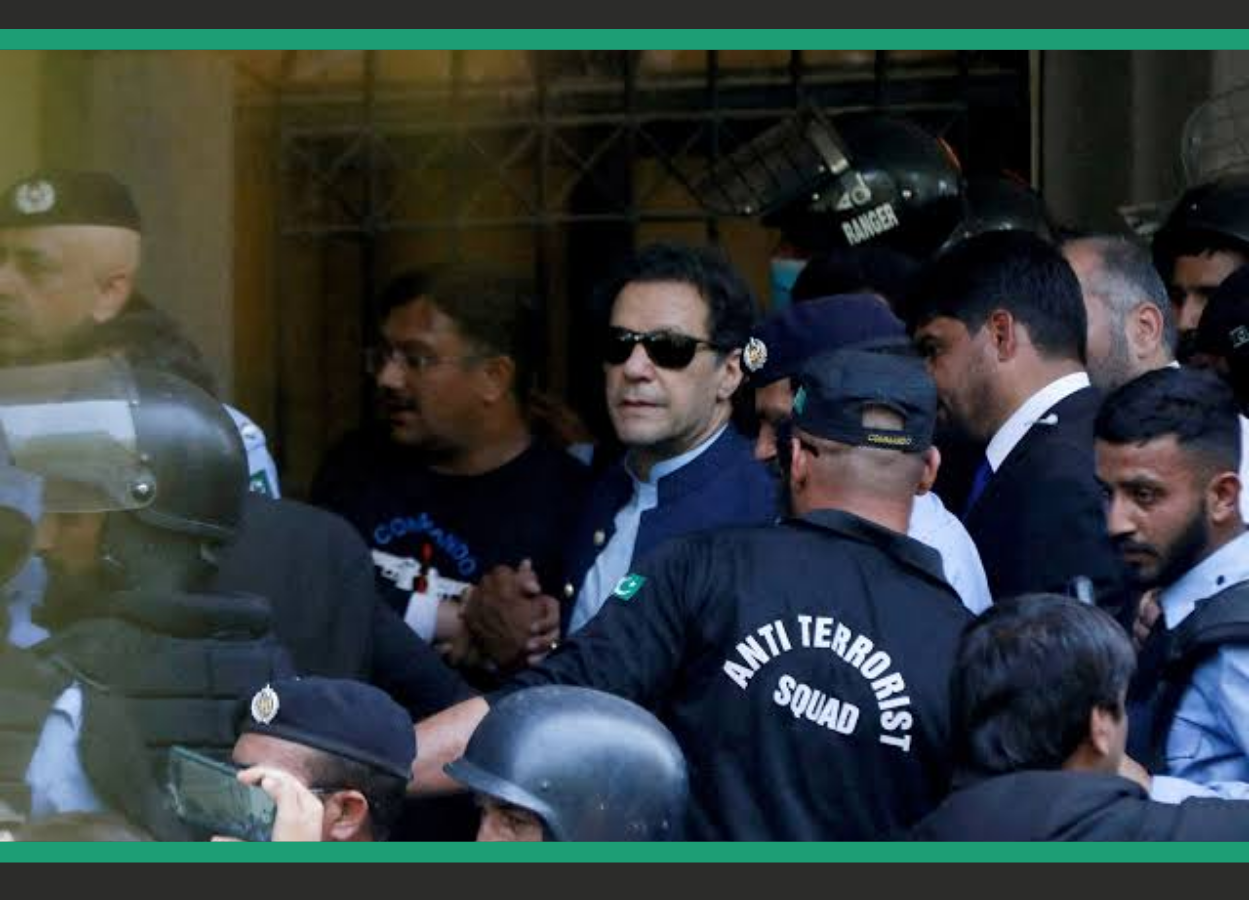
Imran Khan’s imprisonment is no longer merely a dispute over one leader, one party, or one election. Whatever one thinks of his record or rhetoric, his treatment has become a test of whether law restrains power — or merely decorates it.
Concerns about his eyesight, access to doctors, conditions of confinement, and communication with his family make APPNA’s silence indefensible. A cardiologist may refuse to debate electoral law. A psychiatrist may avoid party politics. But no physician can credibly claim that prolonged isolation, uncertainty, humiliation, and restricted medical access fall outside the boundaries of professional concern.
APPNA also possesses something more valuable than moral language: leverage.
Pakistani physicians in North America are among the diaspora’s most prosperous, organized, and influential communities. Their money, travel, philanthropy, networks, investments, and remittances matter. Pakistan receives billions of dollars from overseas Pakistanis. APPNA may not control that river, but it represents a constituency powerful enough to disturb its flow.
The organization should call for a coordinated one-week suspension — renewable if necessary — of nonessential travel and discretionary remittances to Pakistan.
The demands should be narrow, public, and impossible to caricature: an independent medical evaluation for Khan; dependable access to family and counsel; humane conditions of confinement; and the same protections for every political prisoner.
This would not be economic warfare against Pakistan.
It would be a warning to those who have confused the Pakistani state with their private estate.
Essential support for vulnerable families must continue. The purpose is not to punish ordinary Pakistanis. It is to remind the authorities that overseas Pakistanis are not ornamental wallets — expected to finance the country, applaud its rulers, and remain silent while law and dignity are dismantled.
One week would carry enormous symbolic force. It would announce that diaspora money does not arrive without memory, conscience, or conditions. It would transform APPNA from an organization that petitions officials for access into one capable of imposing reputational and economic cost.
Power rarely discovers morality on its own.
It discovers consequences.
APPNA’s president therefore faces a choice far larger than public relations. He can lead physicians in defense of medical dignity and legal humanity, or continue approaching Pakistani officials with the quivering courtesy of a colonial intermediary requesting favors from his superiors.
That posture may preserve invitations. It may produce photographs. It may secure a seat near power.
It will not preserve respect.
Leadership is not occupying a prestigious chair while ensuring that nothing consequential happens. Leadership means spending institutional capital when the moral stakes justify the risk.
APPNA has accumulated immense capital — financial, professional, social, and political. If it cannot deploy even a fraction of that power when a prisoner’s health, dignity, and legal rights are at stake, then its influence is not influence at all.
It is vanity.
The president should organize this act of disciplined pressure — or step aside for someone who understands the difference between prominence and leadership. Otherwise, he may be remembered as the man who inherited APPNA’s prestige and converted it into institutional shame.
History is ruthless toward elites who possessed power, recognized injustice, and chose etiquette.
APPNA still has time to redeem itself.
One week. One principled demand. One unmistakable act of courage.
The question is no longer whether APPNA has influence.
The question is whether anyone leading it has the courage to use it.








No Comments