There are silences born of caution. Silences born of fear. And silences that linger so long they begin to lose their innocence.
The silence of much of the Muslim intelligentsia over the persecution of Imran Khan is nearing that point.
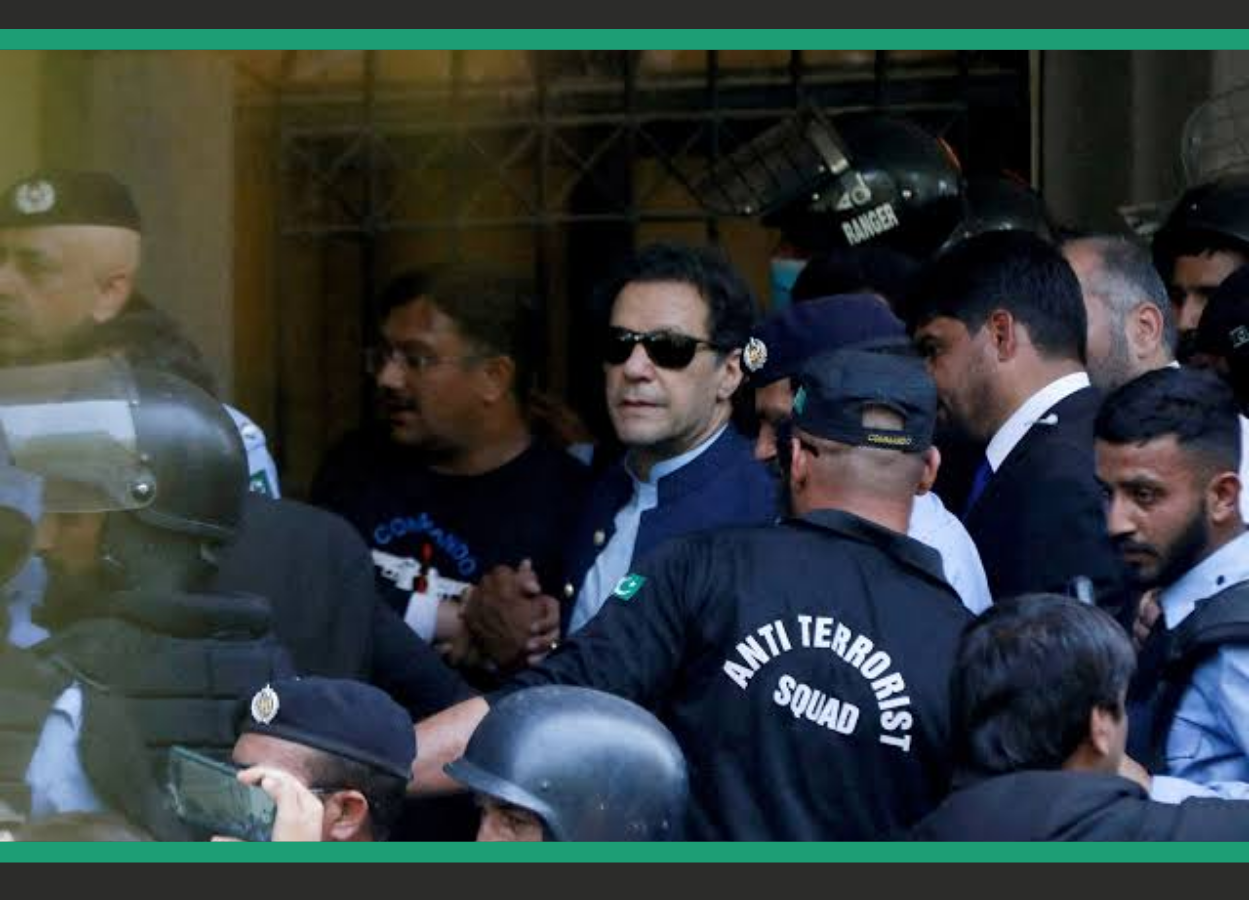
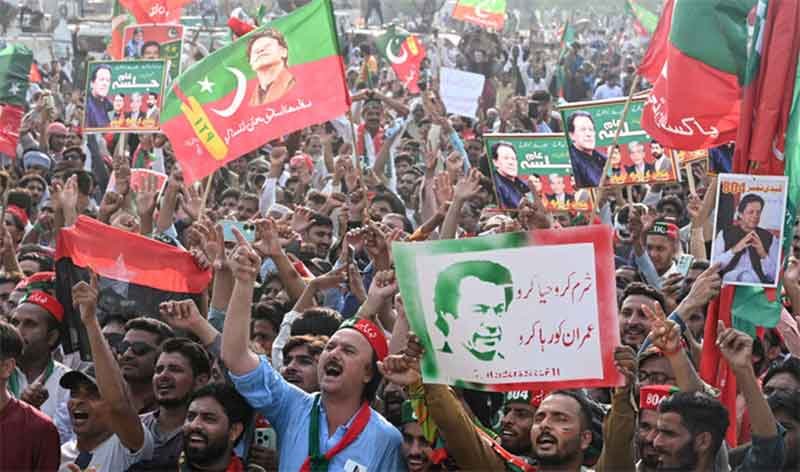
For three years, one of the most consequential Muslim political figures of our age has been engulfed by prosecutions, convictions, overturned convictions, replacement charges, political exclusion and imprisonment. His movement has been constricted. His supporters have faced extraordinary pressure. Access to family, doctors and political life has repeatedly become a mechanism of state control.
And through much of this, too much of the professional Muslim conscience in the West has remained conspicuously quiet.
That silence is no longer merely disappointing.
It has become a serious Islamic moral question.
Where are the scholars who have spent decades teaching that believers must stand firmly for justice? Where are the public intellectuals who rightly recognize authoritarianism in Europe, Hindutva in India, occupation in Palestine and imperial violence emanating from Washington, yet grow hesitant when repression unfolds inside a Muslim-majority state?
Tyranny does not become morally ambiguous because it speaks a familiar language, flies a familiar flag or enjoys respectable relations with Western capitals.
Complexity may counsel care.
It cannot become a refuge from conscience.
The issue is not whether every Muslim must support Khan politically. That is beside the point. One may have reservations about aspects of his record and still recognize the elementary distinction between political disagreement and political persecution.
Solidarity is not canonization.
Justice is not party membership.
And the Qur’anic command to stand against oppression does not disappear because the man being oppressed once governed imperfectly.
What makes this silence especially striking is that Khan himself articulated his public project in unmistakably Islamic moral terms: dignity, welfare, sovereignty, freedom from servitude, Palestine, Kashmir, Islamophobia and the recovery of Muslim political agency.
Whatever one thinks of every decision made in office, the moral architecture of that project was unmistakable.
A Muslim leader spends years telling people that human beings must bow before God rather than worldly masters.
Worldly powers imprison him.
And many who preach the same theology answer with caution.
That contradiction should trouble us.
There have been honorable exceptions, and they deserve to be named because courage should never be anonymous: Shaykh Yassir Qadhi, Naledi Pandor, Noura Erakat, Yvonne Ridley, Imam Rashied Omar, Myriam François, Nader Hashemi, Riffat Hassan, Fawzia Afzal-Khan, Abdul Jabbar, Chandra Muzaffar, Sana Saeed, Maria Kari, Sabreena Ghaffar-Siddiqui, and Ammar Ali Jan have spoken against the injustice inflicted upon Khan.
Their example proves something important.
One need not surrender nuance to defend justice.
One need not become partisan to oppose persecution.
The wider Muslim intellectual and religious establishment therefore faces a question it can no longer postpone:
What is Islamic ethics for if it grows quiet precisely when power grows loud?
What does solidarity with Palestine mean if the principle behind it cannot also survive Pakistan?
What does advocacy for Kashmir mean if a leader who made Kashmir central to his public conscience can remain imprisoned without sustained demands for his freedom?
What does “speaking truth to power” mean if we speak only where power is unlikely to answer?
The Islamic imperative is clear.
Muslim scholars, community leaders, activists and public intellectuals should demand Khan’s immediate release. They should organize statements, public meetings, legal initiatives, delegations, lobbying campaigns, media pressure and sustained international advocacy.
They should make his imprisonment harder to ignore.
Harder to normalize.
Harder to sustain.
Not after another conviction.
Not after another medical crisis.
Not after the moment for courage has passed.
Now.
And they should reject the comforting assumption that they are powerless.
They are not.
Western Muslim institutions possess donor networks, media access, legal expertise, electoral influence, universities, civil-society partnerships, relationships with politicians and access to human-rights organizations. Scholars command pulpits. Intellectuals command platforms. Activists know how to mobilize.
They have demonstrated this capacity for Palestine.
They have demonstrated it against Islamophobia.
They have demonstrated it for political prisoners elsewhere.
They can demonstrate it for Imran Khan.
No single scholar can open a prison door. But sustained international pressure can raise diplomatic costs, shift media narratives, compel politicians to ask questions, energize human-rights institutions and make repression more difficult to normalize.
The capacity exists.
What is needed now is resolve.
That is why this moment matters so much.
Many Muslim thinkers have spent years writing and speaking about empire, authoritarianism, decolonization, Muslim agency and the prophetic duty to resist injustice. Those ideas were never meant to remain elegant vocabulary for conferences and classrooms.
They were meant to govern action.
Khan’s imprisonment is a test of whether those principles can survive contact with political discomfort.
There is still time to pass that test.
Because courage is cheapest after danger has passed. If catastrophe comes, there will be symposiums, tributes and solemn declarations of long-held concern.
But moral leadership matters before the obituary.
Before the retrospective.
Before everyone agrees it was obvious.
The prophetic tradition does not teach believers merely to condemn Pharaoh after Pharaoh has fallen.
It teaches them to speak while Pharaoh still sits on the throne.
That is the moment before us now.
To demand Khan’s freedom is not to declare him infallible.
It is not to erase complexity.
It is to insist that complexity must never become camouflage for injustice.
Those who have been silent can still speak.
Those who have been cautious can still organize.
Those who have hesitated can still act.
And that matters, because history is not yet written.
The minbars are still full.
The institutes are still influential.
The platforms are still powerful.
The voices are still available.
The question is whether they will be used while they can still matter.
There will come a day when Imran Khan is either free — or when the Muslim world will be forced to explain why it found its voice too late.
That explanation will not be enough.
So speak now.
Organize now.
Demand his freedom now.
Before caution becomes complicity.
Before silence hardens into history.
Before the chance to stand with the prisoner becomes nothing more than the regret of having watched the prison door close.





No Comments