Introduction
Former Prime Minister Imran Khan’s religious worldview has often been portrayed by critics as fundamentalist, irrational, or excessively conservative. However, according to Professor Junaid S. Ahmad, such characterizations reflect more about Pakistan’s secular-liberal elite and their inherited colonial assumptions than about Khan himself.
Rather than representing clerical extremism, Khan’s political theology combines spirituality, reformist ethics, anti-imperial thought, and a deep concern for Muslim dignity and sovereignty.
Beyond the “Taliban Khan” Narrative
For years, opponents have attempted to reduce Imran Khan’s religious language to simplistic labels. Terms such as “medieval,” “mystical,” and “Taliban Khan” have become common tools of criticism.
Professor Ahmad argues that these labels are intellectually lazy and fail to engage with the complexity of Khan’s worldview. Instead, they reveal an inability among certain elites to understand Islam outside frameworks inherited from Western colonial perspectives.
According to this view, religion is acceptable only when privatized and stripped of political significance. Popular and public expressions of Islamic identity are often treated with suspicion.
Influence of Seyyed Hossein Nasr
One of the most important influences on Imran Khan’s religious imagination is the renowned Islamic philosopher Seyyed Hossein Nasr.
Nasr advocates a civilizational understanding of Islam characterized by:
- Spiritual depth.
- Intellectual refinement.
- Sacred order.
- Religious pluralism.
- Confidence rooted in tradition.
This perspective views Islam not as a rigid political ideology but as a source of meaning, beauty, and transcendence.
Khan’s public religiosity, therefore, is less about enforcing doctrine and more about restoring confidence and dignity to Muslims who have long experienced cultural and political humiliation.
The Ethical Influence of Dr. Riffat Hassan
Another major influence identified by Professor Ahmad is Dr. Riffat Hassan, a prominent figure in Islamic feminist theology.
Hassan’s work emphasizes:
- Ethical interpretations of revelation.
- Opposition to patriarchal distortions of religion.
- Reform from within the Islamic tradition.
- Justice and equality as central Islamic principles.
Although Imran Khan is not a systematic feminist theologian, his engagement with such intellectual traditions challenges the stereotype that portrays him as a rigid religious conservative.
Muhammad Iqbal and Ali Shariati: Sources of Revolutionary Thought
The ideas of Allama Muhammad Iqbal and Ali Shariati have also shaped Khan’s political outlook.
Muhammad Iqbal’s Vision
Iqbal emphasized:
- Selfhood and spiritual growth.
- Dynamic and evolving faith.
- Human creativity and moral responsibility.
- The revival of Muslim confidence.
For Iqbal, Islam was not a museum artifact but a force for renewal and progress.
Ali Shariati’s Legacy
Ali Shariati transformed Islamic thought into a language of resistance against:
- Imperial domination.
- Social inequality.
- Elite corruption.
- Clerical stagnation.
Through this lens, Islam becomes not merely an identity but a critique of unjust power structures.
Corruption and Dependency as Moral Failures
Professor Ahmad argues that Imran Khan sees corruption not simply as financial wrongdoing but as evidence of deeper civilizational decay.
Similarly, foreign dependency is viewed not merely as poor policy but as a system that conditions local elites to accept subservience while presenting it as realism.
This moral language, according to Ahmad, explains why Khan’s rhetoric resonates with millions who perceive Pakistan’s ruling structures as compromised and disconnected from national sovereignty.
Why the Establishment Fears Imran Khan
The argument presented is that Pakistan’s ruling elites are troubled not because Khan is always consistent or free from contradictions, but because he challenges their monopoly over the meaning of Pakistan.
According to Ahmad, traditional power structures have often used religion as:
- Symbolic decoration.
- Political theater.
- A tool of discipline.
By contrast, Khan’s rhetoric employs Islamic concepts such as dignity, sacrifice, and sovereignty as standards by which power itself is judged.
The Controversy Surrounding Bushra Bibi
Professor Ahmad also addresses criticism directed toward Bushra Bibi.
He argues that the ridicule surrounding her spirituality, dress, and lifestyle reflects social prejudice and class bias rather than genuine analysis.
According to this perspective, many who celebrate feminist interpretations of European history fail to extend similar understanding to Muslim women whose religious expressions do not conform to elite expectations.
A Political Theology of Tension
Imran Khan’s worldview is not without contradictions.
It contains tensions between:
- Mysticism and mass politics.
- Ethical reform and moral paternalism.
- Spiritual renewal and populist mobilization.
However, Professor Ahmad contends that these tensions should be studied seriously rather than dismissed through caricature and insults.
Conclusion
According to Professor Junaid S. Ahmad, Imran Khan has transformed Islamic language from an instrument of political legitimacy into a means of challenging entrenched power.
His message combines spirituality, anti-imperialism, ethical reform, and civilizational confidence, creating a political vocabulary that resonates with millions of Pakistanis.
Whether one agrees with his politics or not, understanding the intellectual traditions that influence him requires a deeper engagement than the simplistic labels that often dominate public discourse.
Author
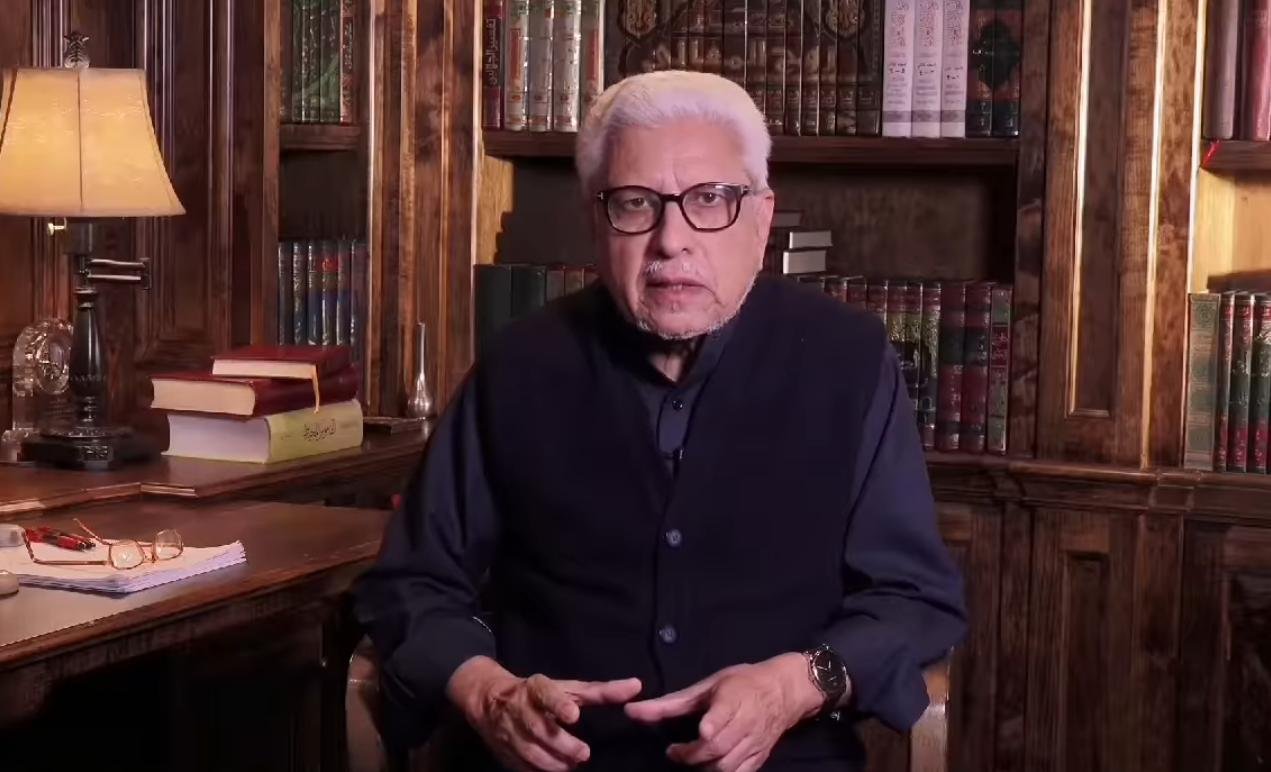
Prof. Junaid S. Ahmad
Professor of Law, Religion, and Global Politics
Director, Center for the Study of Islam and Decolonization (CSID), Islamabad, Pakistan.




No Comments